If you live in Spring, Texas, you know that the sun doesn't mess around. The light here is relentless and bright, especially in summer, and it changes how paint colors actually look on your walls. A color that looks perfect on a paint chip inside the store can look completely different once it hits the south-facing wall of your house at 2 p.m. in July. This matters more than most people think because you're going to live with that color for years, and getting it wrong is expensive and frustrating. The good news is that understanding how Texas heat and light affect paint means you can pick colors you'll actually love.
The Light in Spring Is Harsher Than You Think
Spring sits in Southeast Texas, and the sun here is intense. We get long days, high UV exposure, and humidity that bounces light around in ways you don't see in other climates. The angle of the sun changes throughout the day and the year, which means a color on your north-facing wall will look completely different from the same color on a wall that faces west. West-facing walls get hammered by afternoon heat and light, and that warm, golden glare can make cool colors look dingy and make warm colors look washed out or even orange. North-facing walls stay cooler and the light is more stable, so colors read closer to how they look on the paint chip.
Before you pick a color, spend time in your house at different times of day. Look at the walls you want to paint in morning light, midday light, and late afternoon. Bring your paint samples with you and hold them up. Watch how they change. This is the most honest way to see what you're actually getting.
Warm Colors Need Extra Caution in Texas Heat
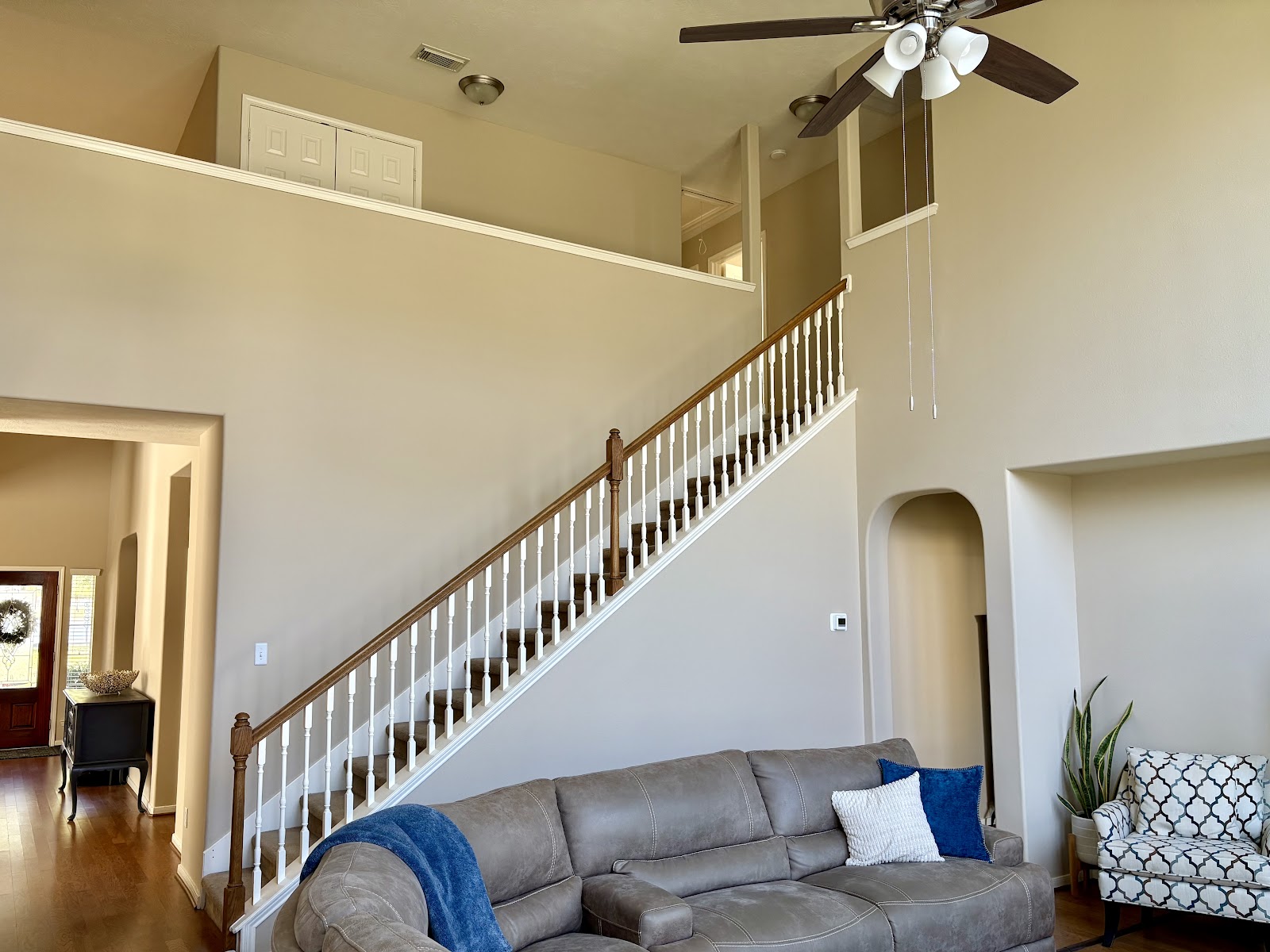
Warm colors, creams, beiges, warm grays, and soft oranges can be beautiful in a Texas home, but the afternoon sun will intensify them. A beige that looks soft and neutral in the paint store can look golden or even peachy once the sun hits it for hours. If you love warm colors, test them on a large section of wall first, not just a small paint chip. Paint a 2-by-3-foot patch and live with it for a few days, watching it in different light. The investment in a quart of paint is worth avoiding a full-house mistake.
If you go with warm tones, consider using them on walls that don't get direct afternoon sun. East-facing walls get morning light, which is softer and more flattering to warm colors. West-facing walls are trickier and might push a warm color too far toward orange.
Cool Colors Can Go Gray in Full Sun
Cool colors, blues, greens, and cool grays, can look sophisticated and calm, but here's the trap: intense sunlight can wash them out or make them look gray and lifeless. A soft blue that looks crisp in the showroom might look pale and washed out on a south-facing wall. The UV light just drains the color. Greens can turn muddy. Cool grays can look almost white in bright afternoon sun.
This doesn't mean you can't use cool colors in Spring. It means you need to pick them with intention. Choose cool colors that are slightly more saturated than you think you want. A blue-gray with a bit more blue in it will hold up better than a very pale, barely-there blue. If you're painting a room that gets heavy afternoon sun, test your cool color choice on the wall where it will get the most light, and give yourself time to see it under full sun conditions.
Consider Sheen and Finish for Heat Reflection
The finish you choose matters as much as the color. Flat or matte finishes absorb light and heat, which can make colors look deeper but also makes them harder to clean in a dusty Texas climate. Eggshell or satin finishes reflect a little light, which can help colors hold their appearance in bright sun and makes walls easier to wipe down when the dust settles. High-gloss finishes reflect a lot of light and can look shiny in ways that feel wrong for interior walls, but they're practical for trim and doors that take a beating.
For exterior paint, finish matters even more. The sun is going to fade and weather any paint over time, but quality paint with good UV protection and the right sheen will hold color longer. Flat exterior paint will show dirt and won't last as long as satin or semi-gloss in our climate.
Test Before You Commit to a Full Paint Job
This is the single best piece of advice: always test your color choice on the actual wall you're painting, in the actual light of your home, for at least a few days. Paint a large patch, not a tiny sample. Look at it in morning light, afternoon light, and evening light. Live with it. If it still feels right after that test, you can move forward with confidence.
If you're overwhelmed by the choices or want a second opinion from someone who paints homes in Spring every week, that's exactly what J's Pro Painting does. We can help you think through color choices for your specific walls and light conditions, and we'll handle the painting work so you don't have to.
Give us a call and let's talk about your project.